

Getting a call from a reporter can feel intimidating. Here's how to prepare so you can communicate clearly, stay focused, and make the most of the opportunity.
If you're running for municipal office, there's a good chance you'll eventually get a call from a reporter.
Maybe it's a local newspaper asking about your campaign. Maybe a radio station wants your reaction to a local issue. Maybe someone wants to interview all of the candidates in your ward.
And if you've never done a media interview before, your first thought might be:
Oh no. What am I supposed to say?
The good news is that you don't need to become a professional spokesperson. You don't need to memorize a speech, predict every possible question, or have a perfectly polished answer to everything.
You do need to know what you want voters to understand about you — and you need to be able to communicate that clearly and naturally.
Here are some ways to prepare.
First, Find Out What the Interview Is About
Before agreeing to an interview, it's completely reasonable to ask the reporter a few questions.
What is the story about?
What prompted the interview?
Is the reporter speaking with other candidates?
How long will the interview be?
Will it be live or recorded?
Is it for print, radio, television, or an online story?
You don't need to demand a list of questions in advance. In fact, reporters generally won't provide their questions word-for-word. But understanding the topic and context can help you prepare.
If the reporter is calling about a specific municipal issue, take a few minutes to review the relevant information before the interview. Make sure you understand the basic facts and know what your own position is.
And if you don't understand the question during the interview, ask the reporter to clarify it. That's much better than answering a question you don't actually understand.
Know the Three Things You Want People to Remember
Before an interview, think about the three things you most want voters to know about you or your campaign.
These might be:
Why you're running
One or two priorities that matter most to you
What you would bring to the role
They don't have to be three specific talking points, but it is helpful think of them as your campaign's centre of gravity.
When you're asked a question, look for ways to connect your answer back to those ideas.
For example, imagine your campaign is centred around making your community more accessible for families, seniors, and people with disabilities. You might be asked about roads, recreation, housing, or the municipal budget.
Those are different questions, but you can still connect your answers back to the bigger idea that drives your campaign.
That's how you stay consistent without sounding like you're giving the same answer to every question.
Prepare Your "Stock Answers"
There are a few questions that come up again and again in political interviews.
Prepare short, natural answers to questions like:
Why are you running?
What are your top priorities?
What makes you the right person for this job?
What is the biggest challenge facing your community?
What would you change if elected?
How would you pay for the things you're proposing?
What do you think about [insert a current or topical local issue]?
You don't need to write a script and memorize it.
Instead, think through the answer and practice explaining it in your own words. You want to sound like yourself — not like you've memorized a paragraph five minutes before the interview.
Know the Two Values Behind Your Campaign
Here's another useful exercise: identify two values that sit underneath your campaign.
Maybe it's:
fiscal responsibility and community investment
accessibility and inclusion
responsible growth and environmental stewardship
affordability and opportunity
transparency and accountability
Your values can help you answer questions when you don't have a ready-made position on a particular issue.
For example, you might not have thought about a very specific planning proposal before a reporter asks you about it. Instead of scrambling to invent a position, you can explain what questions you would want answered and what principles would guide your decision.
That can be a much stronger answer than pretending to know something you don't.
Practice Out Loud
Reading your answers silently isn't enough. You need say them out loud.
Better yet, have someone ask you questions and practice answering without looking at your notes. You'll quickly discover which answers are too long, which phrases don't sound like you, and which questions make you uncomfortable. You can even record yourself on your phone and listen back.
It may feel awkward. Do it anyway.
You're not trying to sound perfect. You're trying to become comfortable hearing yourself explain your ideas clearly.
Keep Your Answers Focused
One of the biggest challenges in a media interview is that you probably know way more about a topic than the reporter needs you to explain.
That's okay.
Give the reporter the answer they need, not a five-minute lecture on everything you've ever learned about the issue.
A useful structure is:
Answer the question → give one reason or example → connect it back to your bigger message.
For example:
"I think the city needs to take a closer look at how we're maintaining existing infrastructure before committing to new projects. Residents are already telling us that basic maintenance is a concern, and that's why responsible investment is one of the priorities of my campaign."
You don't have to keep talking just because the microphone is still in front of you. When you’ve finished answering the question, the best thing that you can do is to stop talking.
Let the reporter ask the next question.
Don't Be Afraid to Say "I Don't Know"
You are running for office. You are not expected to know every fact about every municipal issue.
If you don't know the answer, say so.
You can say: "I don't have that information in front of me, so I don't want to guess."
Or: "That's something I'd want to look into before giving you an answer."
Or: "I'm not familiar enough with the details of that proposal yet to give you a responsible answer."
Then, if appropriate, offer to follow up.
It's much better to be honest than to confidently give a reporter incorrect information.
Be Careful With "No Comment"
There are situations where you may genuinely not be able to comment. But "no comment" can easily sound evasive.
If there's a reason you can't answer, explain why.
Instead of simply saying, "No comment."
You might say: "I don't have enough information yet to comment on this, but I'd be happy to speak about what I think the municipality should be considering as it looks at this issue."
You can be honest about what you don't know while still communicating what you do know.
Remember That You Can Disagree Without Getting Personal
Municipal politics can get heated, especially during an election. A reporter may ask you about another candidate's position or something they've said publicly.
You don't have to take the bait. Instead, take a breath and focus on the issue rather than the person.
Try: "I see the issue differently. My concern with that approach is..."
Same thing goes with a question that is framed in a way that makes you want to defend yourself or correct the premise.
If the question contains an assumption you disagree with, you can address it directly. "I don't think that's quite the way I'd frame it. What I think is important here is..."
You can be clear about your disagreement without turning an interview into a fight. Remember: you're not only answering the reporter. You're also showing voters how you handle disagreement.
Remember: You’re Talking To Voters
It's easy to forget this when you're sitting across from a reporter. You're not actually performing for the journalist. You're communicating with the people who will eventually decide whether to vote for you.
Think about what someone watching, listening, or reading the interview needs to understand about you.
Do they understand why you're running?
Do they understand what you care about?
Do they understand what you'd bring to the role?
Do they come away with a clear sense of your priorities?
Those are the things that matter.
TL;DR
A media interview isn't a test you have to pass. It's an opportunity to communicate directly with voters. Before an interview, find out what the story is about, identify the three things you most want voters to remember, and prepare two values that guide your campaign. Practice your likely questions and a few stock answers out loud, but don't memorize a script. Keep your answers focused, be honest when you don't know something, and don't get pulled into personal attacks. Most importantly, remember that you're not performing for the reporter — you're communicating with the voters who are listening.A Simple Media Prep Checklist
Before an interview, make sure you can answer:
☐ What is this interview about?
☐ Why am I being interviewed?
☐ What are the three things I want voters to remember?
☐ What are the two values behind my campaign?
☐ Can I clearly explain why I'm running?
☐ What questions am I most likely to be asked?
☐ What are my stock answers?
☐ Are there any facts or numbers I need to double-check?
☐ Have I practiced answering out loud?
☐ What will I say if I don't know the answer?
Remember: the best thing you can do to prepare for an interview is to know what you want to say, understand your own campaign, and be comfortable enough to have a conversation.
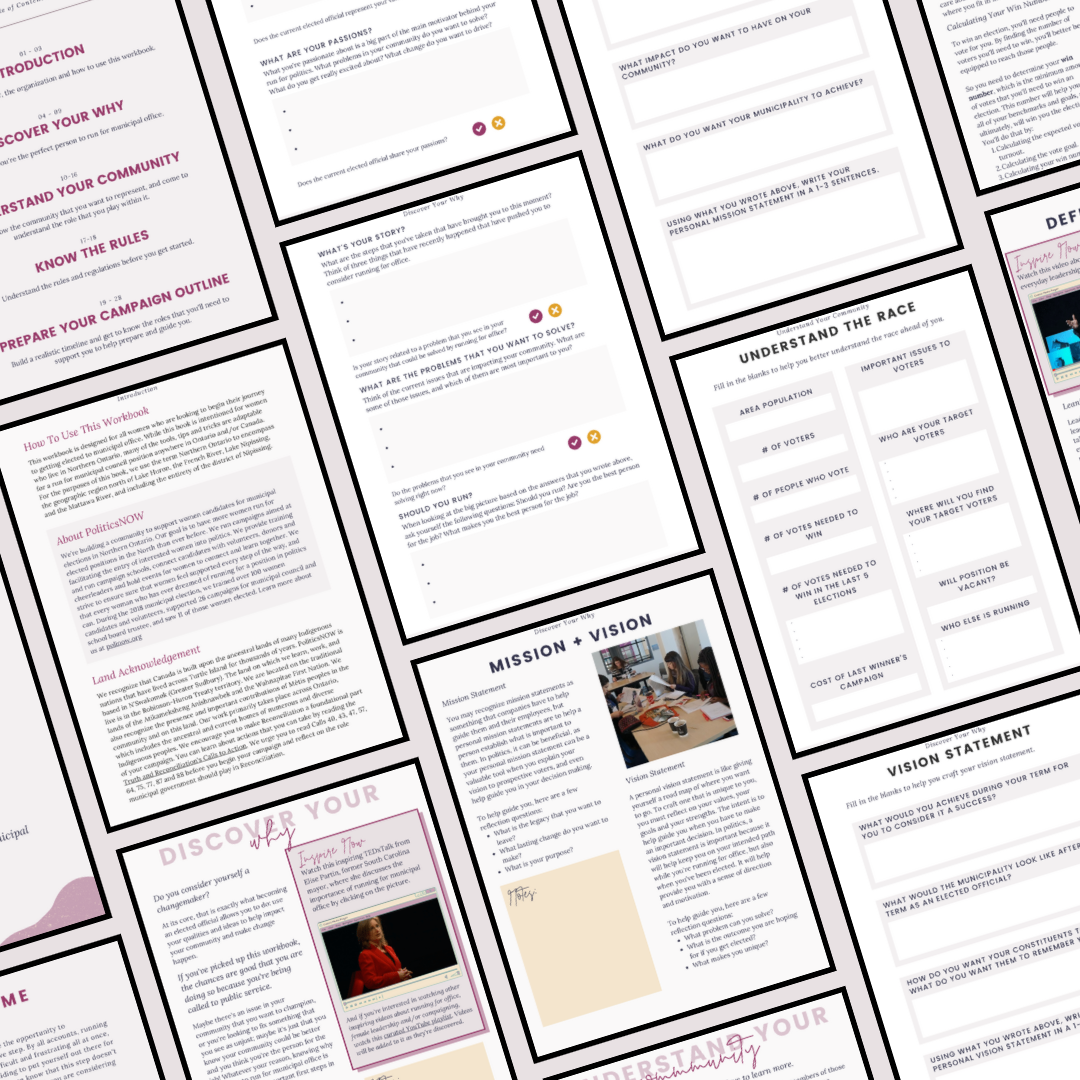






The 2026 edition of Exploring Your Run for Municipal Office is live! Fully updated with new resources, a chapter on protecting your peace, bonus audio, and worksheets to help you explore your run with confidence.