Do I Need Campaign Signs?
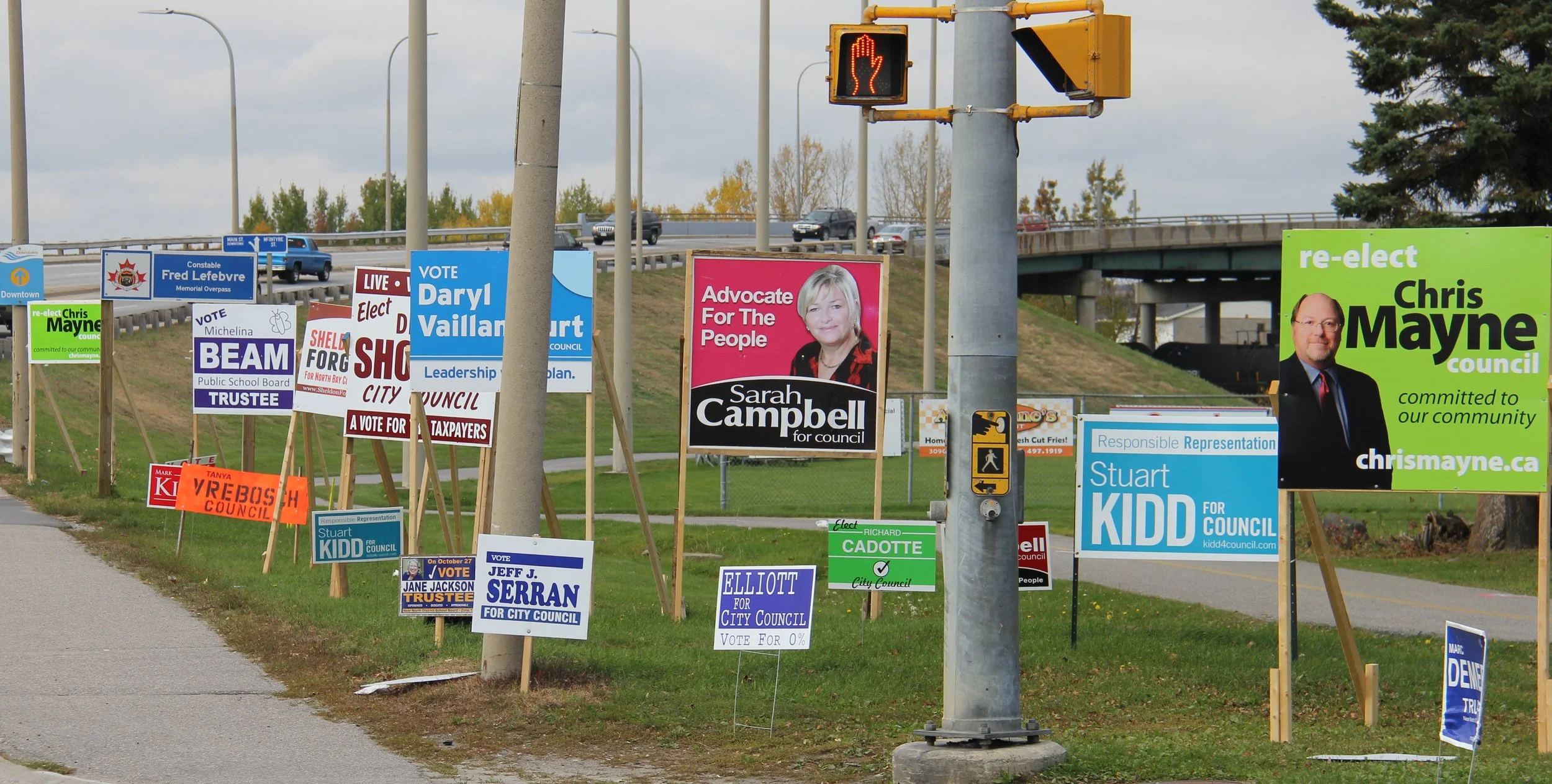
Campaign signs are a familiar part of election season. But do you actually need them to run a strong municipal campaign?
If you're running for municipal office for the first time, you may assume campaign signs are just part of the package.
You see them everywhere during an election. Candidates have signs on lawns, at intersections, outside campaign offices, and sometimes covering entire neighbourhoods.
So naturally, you might be wondering:
Do I need signs? The short answer is: not necessarily.
Signs can be a useful part of a campaign, but they're not a requirement for running a strong one. And as with almost every campaign decision, what makes sense depends on your community, your race, your budget, and what you're trying to accomplish.
So What Are Signs Actually For?
A campaign sign is primarily a visibility tool.
It puts your name in front of people. It can help voters recognize your name when they see it again on a ballot, hear it in a debate, or encounter your campaign somewhere else.
And in a smaller community, repeated visibility can matter. If people are seeing your name around town, it can create a sense that your campaign is active and that you're part of the race.
But here's the important part: a sign doesn't explain who you are, why you're running, or what you want to do. It can't have a conversation with a voter. It can't answer a question. It can't tell someone what makes you different from the other six people running for council.
That's why we think of signs as one piece of a campaign — and not the campaign itself.
You Don't Have to Play the "Who Has More Signs?" Game
One of the easiest traps to fall into during an election is assuming that whatever another campaign is doing must be something you need to do too.
You notice another candidate has hundreds of signs, so you start wondering whether you're behind. Then someone tells you that another candidate has ordered 500. Suddenly you're doing campaign math based on someone else's campaign instead of your own.
Don't do that.
Municipal campaigns can look very different from one another, even in the same community. A well-known incumbent may have a completely different visibility strategy from a first-time candidate. A candidate with a large personal network may not need to spend money in the same places as someone who is newer to the community. And in a mid-sized city or small town, you may have more opportunities to build recognition through actual relationships than you realize.
Your campaign might be better served by spending time at community events, talking to people door-to-door, building a strong volunteer team, getting local media coverage, or simply making sure the people you already know understand that you're running.
There is no prize for having the most signs.
What If You Don't Have the Budget for a Lot of Signs?
This is where candidates sometimes get stuck. They can see signs as an all-or-nothing proposition: either you have enough money to blanket the community, or there's no point.
But that's not really how we’d suggest you approach it. Instead, start by asking what you want the signs to accomplish.
If your goal is simply to make sure your name is visible in the community, you don't necessarily need hundreds of signs. A smaller number of well-placed signs may still give you some visibility — particularly in the neighbourhoods where you have supporters.
And there are other ways to create that same feeling of visibility.
For example, you could create a simple campaign graphic that supporters can use as their Facebook profile or cover photo. You might provide a downloadable image that says “I'm supporting [Candidate]!” or simply features your campaign branding.
That's a different kind of lawn sign: instead of putting your name on 200 lawns, you're putting your campaign into the social networks of people who already support you.
You could also think about:
A shareable social media graphic announcing your candidacy
A simple “Why I'm supporting [Candidate]” graphic for supporters to share
A campaign email that supporters can forward to friends
A strong, recognizable campaign photo and visual identity
Community events where people can meet you in person
Local media opportunities that introduce you and your ideas to voters
Printed handouts or literature that actually tell voters something about you
A volunteer “supporter” campaign where people actively introduce you to others
The point isn't that these things are better or worse than signs. But these are just some of the ideas that can accomplish some of the same underlying goal — helping more people recognize your name and understand that you're running — without requiring you to spend your entire campaign budget on signage.
And If You Do Want Signs, Make Them Work for You
If signs make sense for your campaign, great. You don't need to feel guilty about ordering them because they can be useful. They’re also tested, so you know that they can work.
But remember what you're asking them to do.
Keep the design simple. Your name should be easy to read from a distance, and your campaign should look consistent across your signs, social media, website, literature, and other materials.
And think strategically about where they go. You don't necessarily need to cover every available lawn. Start with your supporters and the places where visibility will actually help your campaign.
Most importantly, check the rules in your municipality before putting signs up. Sign placement, timing, size, and other requirements can vary from one municipality to another.
The Bigger Question Isn't "Do I Need Signs?"
It's "What does my campaign need right now?"
If you're still trying to meet voters, recruit volunteers, or build your supporter base, another box of signs probably isn't going to solve that problem.
If you're already doing a lot of voter contact and you want to reinforce your name recognition, signs might make sense.
If your campaign has a strong online community, perhaps you can turn some of your supporters into your visibility network.
If you're running in a smaller community where people know one another, personal introductions and community relationships may be far more valuable than 50 signs.
And if you have a limited budget, you should be especially careful about spending money because it looks like you're supposed to spend it.
Every campaign dollar should have a job.
Sometimes that job is a sign. Sometimes it's printing. Sometimes it's Facebook advertising. Sometimes it's gas to get you to another community event. Sometimes it's absolutely nothing yet — because you need to keep some money available for the last few weeks of the campaign.
There's no single right answer, and you know what works best for your campaign.