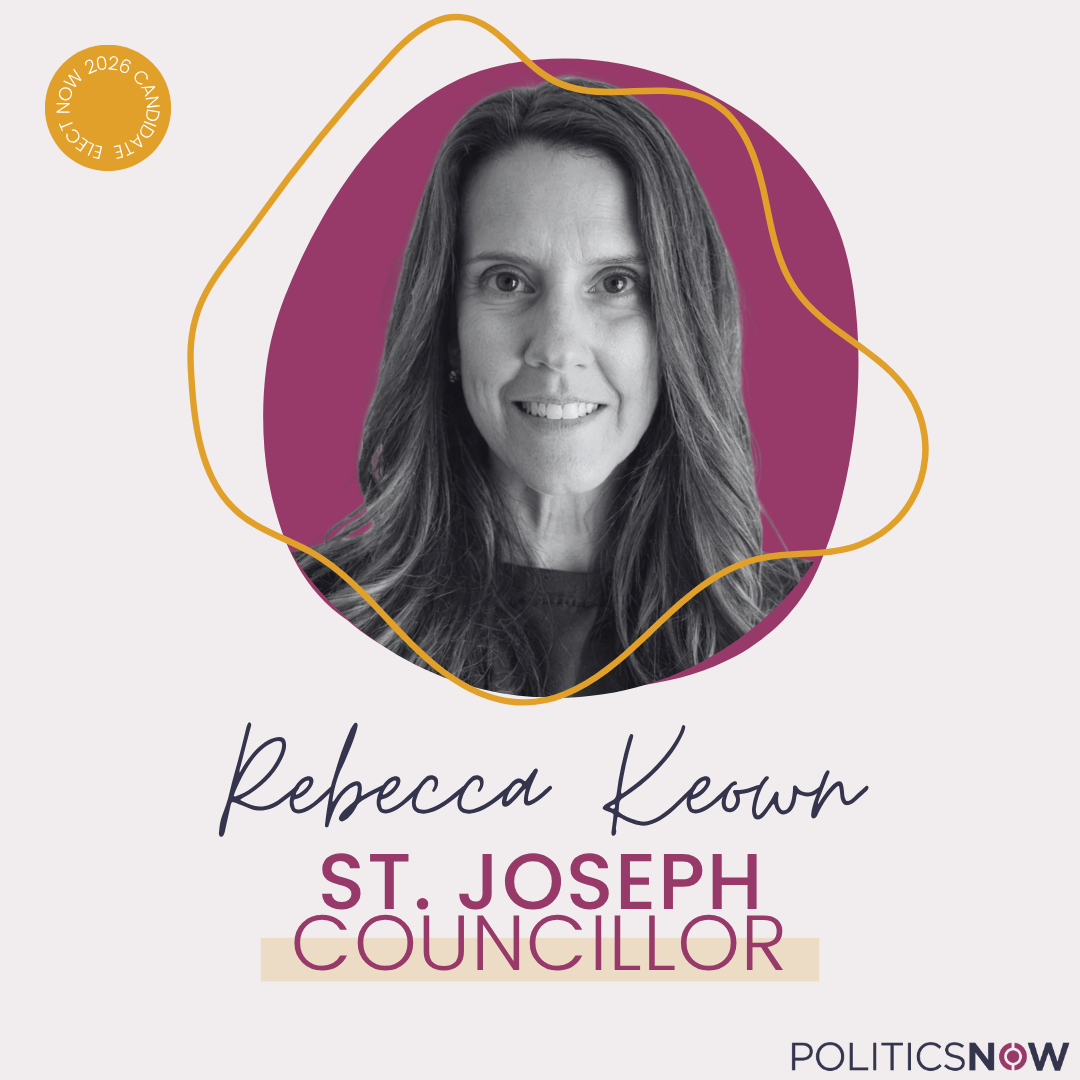
Rebecca Keown
Rebecca Keown is running for Councillor in the Township of St. Joseph.
Rebecca Keown (she/her) is a senior leader, educator, volunteer, and community builder with professional experience in health care administration, post-secondary education, and public policy. She currently serves as Dean, Health programs at Sault College and is sessional faculty in the Department of Law and Political Science at Algoma University. Previously, she held the role of Director, Quality & Medical Affairs at Sault Area Hospital. Rebecca holds a Bachelor of Arts (Honours) degree from the University of Toronto and a Master of Bioethics and Health Law from the University of Otago, New Zealand. She is an experienced board member, including on the Sault Area Hospital Patient and Family Advisory Council, Algoma University Research Ethics Board, Township of St. Joseph Recreation, Parks, and Culture Committee, and Group Health Association Board.
Why are you running for this position?
I am running for councillor because St. Joseph Island holds a special place in my heart, and I care deeply about our community. Participating in local government provides an opportunity to give back to a community that means so much to me and to continue my commitment to public service in a different capacity.
Decisions made at the municipal level affect our everyday lives, from the roads we travel and the services we rely on to the investments we make in our community. I believe municipal leaders have an important responsibility to make thoughtful decisions that support a healthy, vibrant, and thriving community, both socially and economically.
Through conversations with residents, I have heard firsthand about their health care experiences and concerns. Access to reliable health services when they need emergency care, see their primary care provider, or need support to remain in their own homes for as long as possible is a priority for many residents and their families. These conversations reinforce the importance of listening, understanding different perspectives, and working together to address the issues that matter most.
Throughout my career in health care, post-secondary education, and public policy, I have worked with people, organizations, and communities to navigate complex issues, build partnerships, and plan for the future. I hope to bring this experience to the council table, along with a commitment to integrity, accountability, and open communication. I see this role as an opportunity to serve residents, work collaboratively with fellow council members and community partners, and contribute to thoughtful decisions that reflect community needs and help the Township of St. Joseph continue to thrive.
What do you love most about your community?
What I love most about the Township of St. Joseph is its people and natural environment. So much of the charm of this community comes from the people who live here. I appreciate the generosity and spirit of the residents, and the pride they take in their community and their Island roots. The people are so welcoming, greet their neighbours by name, and are willing to lend a hand whenever it’s needed.
We are so fortunate to be surrounded by the extraordinary diversity of the Great Lakes landscape, from the waters of Lake Huron and the St. Mary’s River to sand beaches, rugged shorelines, rolling farmland, maple forests, and wetlands that support a rich variety of wildlife. This natural environment offers so many possibilities for recreation including kayaking in Gawas Bay, cycling along Highway 548, snowshoeing at Stribling Point, or watching the sun set as a freighter quietly passes by.
What do you think is the biggest challenge facing your municipality right now?
I believe the biggest challenge facing the Township of St. Joseph right now is ensuring reliable, sustainable access to health care services close to home. Recurring emergency department closures in Richards Landing and Thessalon, access to primary care, and the long-term sustainability of the Personal Support Worker (PSW) Outreach Program are significant concerns for residents. Reports from the North Shore Health Network (NSHN) indicate that emergency department closures at these two sites accounted for approximately 60% of all such closures in Ontario over the preceding year. These disruptions reflect the broader challenges rural and northern communities face in recruiting and retaining physicians and other health care professionals and can mean that patients face persistent inequities in the care they receive and in their health outcomes, compared to people living in other parts of the province.
While health care delivery and hospital funding are provincial responsibilities, municipal government has an important role in advocating for local needs, building partnerships, and ensuring community perspectives inform regional and provincial decisions.
In the short-term, I would support collaborative and innovative efforts to improve physician coverage, reduce preventable emergency department closures, and ensure residents have clear information about available services when closures occur. Looking ahead, I would support the continued exploration of sustainable hospital services for Central Algoma, including the proposed single-site hospital for the western portion of the NSHN’s service area. I would also advocate for sustainable government funding for the PSW Outreach Program, which helps older adults and people with disabilities remain safely in their homes and can ease pressure on families and the broader health care system.
Addressing these challenges requires collaboration among the NSHN, local physicians and other health professionals, Ontario Health, the Ministry of Health, Algoma District Services Administration Board, and neighbouring municipalities. As a councillor, I would work to ensure the Township of St. Joseph has a strong voice in these discussions. We need to pursue immediate solutions to current service gaps while helping shape a sustainable, accessible health care system for our community over the long term.
What does good local government look like to you?
To me, good local government is about listening to residents, making informed and responsible decisions, and being accountable for those decisions. It means managing taxpayer resources carefully, maintaining reliable infrastructure and services, and planning thoughtfully for the future while protecting what makes our community special.
It also means being accessible, communicating openly, and respecting different perspectives, even when there isn’t agreement. While community input is essential, council must also weigh competing interests, available resources, evidence, costs, and long-term consequences.
I believe values-based decision-making is central to good governance. It means applying principles of integrity, fairness, and accountability consistently, particularly when decisions are complex or priorities compete. It also means welcoming diverse voices and experiences and considering who benefits from municipal services, who faces barriers, and whether resources are reaching people with different needs. This approach helps council challenge assumptions, consider broader impacts, and make more informed decisions.
Good local government is about working collaboratively to serve the community, being transparent about how and why decisions are made, and earning the trust of residents through responsible leadership.
How do you approach working with people who disagree with you?
Throughout my career, I’ve worked with people who bring different perspectives, priorities, and opinions to complex issues. I listen carefully and with curiosity to understand the reasoning behind different viewpoints, and I remain open to having my own views challenged. My experience leading teams has taught me that disagreement can be constructive when people feel heard and respected, and that considering diverse perspectives results in more considered, balanced decisions.
When disagreements arise, I seek to understand the underlying concerns, identify common ground and find shared priorities, even on the most divisive of issues. I approach these conversations with respect and support my own perspectives with evidence, while recognizing that others may bring valuable insights I haven’t yet considered.
As a councillor, I would bring that same approach to the council table. We may disagree on the best path forward but we share a responsibility to make informed decisions in the best interests of our community. Even when consensus is not possible, I would respect differing opinions, work collaboratively with my colleagues, and remain focused on serving the residents of the Township of St. Joseph.
What does having more women in local leadership change?
The Association of Municipalities of Ontario (AMO) reports that women accounted for approximately 32% of elected or acclaimed municipal officials following Ontario’s 2022 municipal election. While representation has increased over time, women remain underrepresented at municipal council tables.
I believe local decision-making is strengthened when people with diverse backgrounds, experiences, and perspectives have opportunities to contribute. Having more women in local leadership can change the conversations, broaden perspectives, and influence how decisions are made. People bring different insights shaped by their careers, family responsibilities, lived experiences, and involvement in the community. These differences enrich discussions, help councils consider issues from multiple angles, and help ensure important perspectives are not missing from the conversation.
Representation also matters because it demonstrates that women belong in leadership and that their voices can make a difference. It is especially important for younger girls and women to see themselves represented in leadership roles and to recognize that their own voices, skills, and ideas have a place at the table. Seeing what is possible can inspire the next generation to consider leadership and public service.
Ultimately, having more women in local leadership helps build a council that reflects the community it serves and makes room for different voices to be heard.
What is something about you that you would like voters to know that they might not learn from your campaign platform?
Lately, I’ve been spending more time gardening with native plants that support pollinators and biodiversity. Some of my favourites include Agastache foeniculum (anise hyssop), Verbena hastata (blue vervain), and Ceanothus americanus (New Jersey tea). I’ve been learning more about what grows well on St. Joseph Island and which plants best support our local ecosystem. I’ve even tried my hand at winter sowing. It’s been a rewarding way to spend time outdoors, learn something new, and contribute in a small way to protecting the natural environment we’re so fortunate to have here on the Island.
Something else people may not know about me is that early in my career, when I was a new graduate, I worked in municipal government in the Georgian Bay area as a Planning and Building Assistant. I gained hands-on experience with building permits, municipal land use planning processes (such as, zoning by-law amendments, shore road allowance purchases, and land severance applications), and municipal taxation. That experience gave me an early appreciation for the range of responsibilities municipalities manage and the ways local government decisions impact residents and the broader community.
Where can people find you?
Facebook: https://www.facebook.com/profile.php?id=61593591247743
Instagram: @rebeccakeownstjoseph
LinkedIn: @rebeccakeown